
Category:
sub
/
Medical
Remove suitable moles safely with dermatologist-led assessment and precision technique.
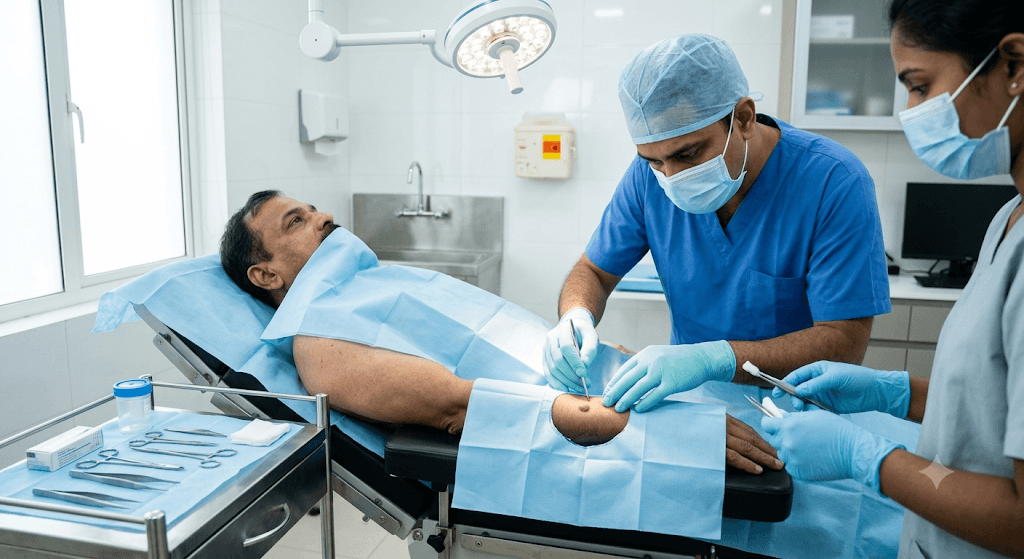
Mole Excision is a minor surgical procedure used to remove selected moles for medical evaluation, irritation, cosmetic concerns, or change-related monitoring.
Safe Mole Assessment and Removal
Assessment Before Excision
Every mole should be assessed before removal, especially if it is changing in size, colour, border, shape, sensation, or bleeding. Your doctor evaluates whether excision, biopsy, dermoscopy, or referral is appropriate.
Precision Minor Procedure
Mole excision is performed under local anaesthesia. Depending on the mole type and location, the doctor may use surgical excision with stitches or a shave technique. The aim is safe removal with careful wound planning.


Medical Clarity With Cosmetic Care
Histopathology When Needed
Removed tissue may be sent for laboratory examination when clinically indicated. This helps confirm the diagnosis and ensures suspicious lesions are not treated as purely cosmetic concerns.
Healing and Scar Care
Some scarring is expected whenever skin is cut. Technique, location, skin type, aftercare, and tendency to keloid or pigmentation influence healing. Follow-up helps monitor the wound and final cosmetic result.
FAQs
Is mole excision painful?
Local anaesthesia is used to numb the area, so discomfort during the procedure is usually minimal. Mild soreness can occur afterwards.
Will there be a scar?
Yes, any excision can leave a scar. The goal is to make it as neat as possible and guide healing with proper aftercare.
Should every mole be removed?
No. Many moles are harmless. Removal is advised based on medical signs, irritation, cosmetic preference, or diagnostic need.
Can a removed mole be tested?
Yes. Tissue can be sent for histopathology if the doctor recommends it.